
10 Freelance Contract Red Flags That Could Cost You Thousands
Freelancers sign contracts all the time, but most never read them carefully. That is a mistake. A single bad clause can mean unpaid work, lost ownership of your creative output, or liability that far exceeds what you were paid. Below are the most common freelance contract red flags and what to do when you spot them.
1. No payment terms or vague deadlines
If the contract does not state when you get paid, how much, and what triggers payment (milestone, net-30, on delivery), you have no enforceable right to timely compensation. Look for language like "payment at client's discretion" or missing invoice deadlines entirely.
2. Unlimited revisions
Phrases like "revisions until client is satisfied" with no cap are a recipe for scope creep. A fair contract specifies a fixed number of revision rounds. Anything beyond that should be billed separately at an agreed rate.
3. Full intellectual property assignment before payment
Some contracts transfer all IP rights the moment work is delivered, regardless of whether the client has paid. This means the client could use your work, refuse to pay, and legally own everything you created. Healthy contracts tie IP transfer to full payment.
4. Non-compete clauses that are too broad
A non-compete that prevents you from working in your entire industry for 12 months is unreasonable for a freelance engagement. Reasonable non-competes are narrow in scope, geography, and duration. If the clause would prevent you from earning a living, push back.
5. Indemnification without limits
Indemnification clauses require you to cover the client's legal costs if something goes wrong. Without a cap, you could be on the hook for damages that dwarf your project fee. Look for language that limits your liability to the total amount paid under the contract.
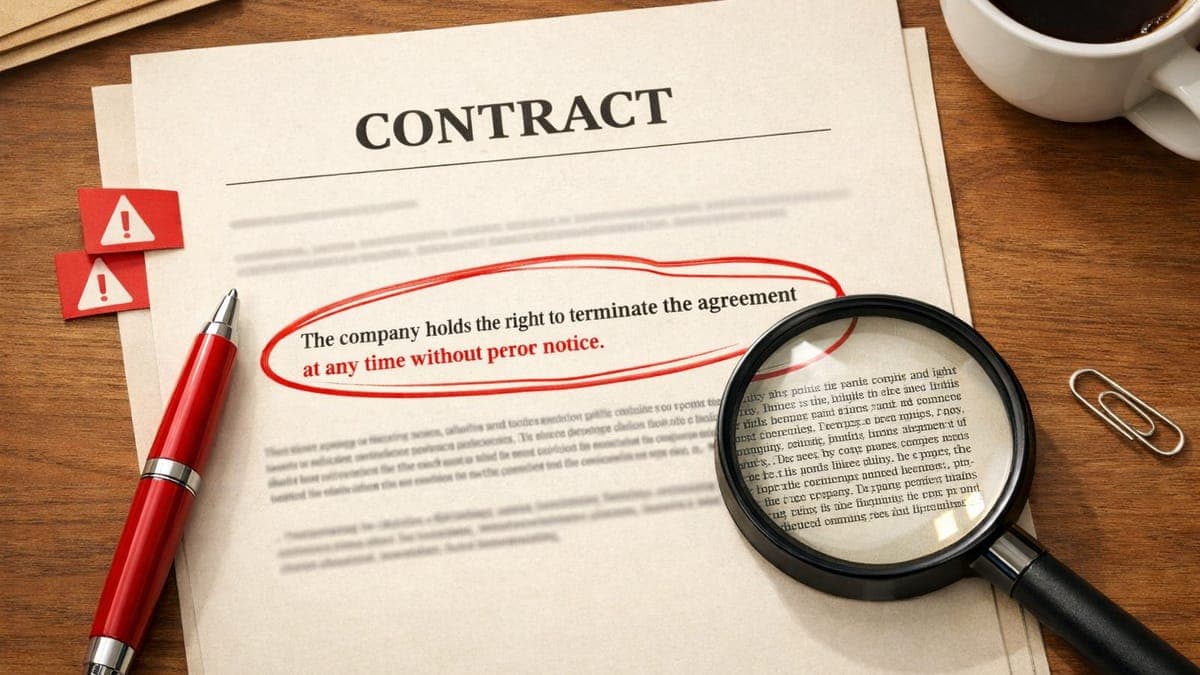
6. Termination without payment for completed work
If the client can terminate the contract at any time and owes you nothing for work already delivered, that is a serious risk. Fair termination clauses guarantee payment for completed milestones and provide reasonable notice periods (typically 14 to 30 days).
7. Vague or missing scope of work
A contract that describes the deliverables as "services as needed" gives the client room to demand anything. The scope should list specific deliverables, formats, and quantities. If it is not in writing, it does not exist.
8. Automatic renewal without notice
Some contracts auto-renew unless you opt out within a narrow window, locking you into unfavorable terms. Check for renewal clauses and make sure you have the ability to exit at defined intervals.
9. One-sided confidentiality
Confidentiality should protect both parties. If the NDA only restricts what you can share but places no obligations on the client, it creates an imbalance. The client could share your proprietary methods or pricing with competitors without consequence.
10. No dispute resolution process
Without a defined process (mediation, arbitration, or jurisdiction), resolving a disagreement becomes expensive and unpredictable. Worse, if the contract specifies litigation in a distant jurisdiction, you may never be able to afford to enforce your own rights.
How to protect yourself
Reading every clause is the first step, but it is hard to catch every risk in dense legal language. A contract risk assessment tool can surface problems in seconds that would take hours to find manually.
- Read the full contract before signing, not just the payment section
- Flag anything that feels one-sided or vague
- Negotiate changes in writing before you start work
- Keep a signed copy of the final version for your records
Try ClauseGuard free to scan your next freelance contract for red flags before you sign. Upload your contract and get a full risk breakdown in under 30 seconds.